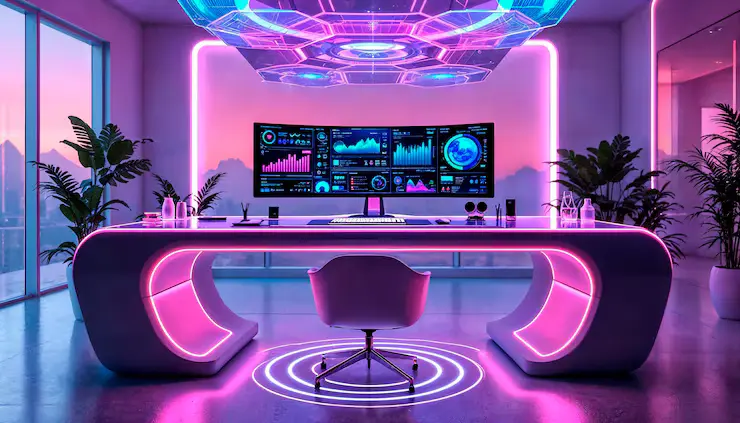

Gaming has experienced a remarkable transformation in the last decade, largely driven by advances in modern gaming PCs. These technologically advanced systems are altering the landscape of home entertainment, giving gamers unprecedented power and flexibility. Whether you are exploring innovative gaming desktop builds and configurations or seeking devices that can keep up with both work and play, modern gaming PCs are at the heart of this digital revolution.
What sets today’s systems apart is their ability to cater to a wide range of preferences and lifestyles. From compact machines for minimalists to powerful high-end rigs for enthusiasts, there is something for everyone. Gaming PCs now often double as central entertainment hubs, accommodating streaming, smart home management, and gaming, all within a single device. As these technologies continue to evolve, the line between traditional PCs, consoles, and smart home solutions grows ever thinner.
This article explores the most significant trends shaping modern gaming PCs, how they impact gaming at home, and what the future holds for this fast-evolving market.
The Rise of Handheld Gaming PCs
Handheld gaming PCs are redefining gaming by merging the portability of a console with the functionality of a computer. Devices such as Valve’s Steam Deck illustrate this phenomenon. According to Valve, nearly 20% of Steam Deck users routinely dock their device for living room gaming, a clear sign that the boundaries between portable and home console use are becoming less distinct. Handheld PCs let gamers pick up where they left off, whether docked to a television or in transit, effectively broadening when and where gaming can happen.
This trend is more than a fleeting preference. It reflects a profound shift toward adaptable technology that meets the demands of diverse gaming habits and lifestyles. The result is a highly personalized experience, untethered from the living room yet ready to deliver console-quality performance when desired.
Integration of ARM-Based Chips
One of the most notable developments in the gaming hardware market is the integration of ARM-based chips into PC gaming devices. Traditionally, the domain of laptops and desktops was dominated by x86 processors from AMD and Intel. However, ARM’s energy-efficient architecture is making inroads, particularly in mobile devices and handheld PCs.
Recent technological showcases, such as ARM’s real-time ray tracing and neural rendering demos, suggest that gaming handhelds powered by ARM chipsets could soon offer advanced graphics while maintaining battery life and affordability. These innovations hold the promise of making high-quality portable gaming devices more cost-effective and accessible to a wider audience.
Gaming Laptops as All-in-One Devices
The definition of a gaming laptop has changed significantly. No longer limited to bulky devices barely portable enough for life on the go, today’s gaming laptops are slim, powerful, and efficient. With advancements in GPU and CPU technology, these machines easily handle the demands of top-tier games while remaining suitable for work, school, or creative projects.
This convergence of performance and portability is attracting users who value both gaming and productivity in their primary system. Features like high-refresh-rate displays, quality audio, and long battery life make gaming laptops a one-stop solution for many users. For context on how much work and play have converged on laptops, PCMag provides a detailed guide to the best current options.
Small Form Factor PCs in Home Entertainment
Small form factor (SFF) PCs are finding their way into more homes thanks to their ability to fit seamlessly into entertainment centers and other limited spaces. Despite their compact size, SFF PCs are powerful enough for modern gaming, media streaming, and smart home control, often matching the performance of larger desktops. These features make them ideal for consumers seeking to minimize clutter without sacrificing performance for daily use or gaming sessions.
Additionally, SFF systems are appealing for home theater setups. With an SFF PC, users can stream video, music, and games from a single unified source. This trend underscores a broader trend toward the consolidation of technology in the home environment.
Prebuilt PCs and Their Impact
While custom gaming PCs have historically been the preference of enthusiasts, prebuilt systems are experiencing rapid growth. These computers come ready to run out of the box, saving users the time and technical knowledge required for a custom build. Thanks to improvements in quality, performance, and part selection, today’s prebuilts rival many custom rigs, often with similar or even better value for the price.
This shift has made high-performance gaming more accessible and less intimidating for a wider range of players. Many new gamers now choose prebuilts to ensure they get the power they need without the potential headaches or compatibility issues of a custom build.
Future Trends in Gaming PCs
The future for gaming PCs is bright and full of promise. Artificial intelligence integration is on the horizon, offering features like adaptive graphics settings and smarter resource management. Developments in cloud gaming, which offload processing to remote servers, are making high-end gaming possible even on less powerful machines. Alongside this, component manufacturers are doubling down on energy efficiency to balance performance with sustainability concerns.
These advancements are shaping a new era in gaming, where choice, flexibility, and environmentally responsible design go hand in hand. As technology improves, gamers can expect increasingly immersive and flexible experiences, whether at home or on the move.
Modern gaming PCs are rewriting the rulebook for how games are played and enjoyed, serving as powerful entertainment hubs, creative platforms, and productivity tools. By embracing innovation and flexibility, gaming PCs are positioned to remain at the core of digital entertainment for years to come.
Also Visit: My Portfolio